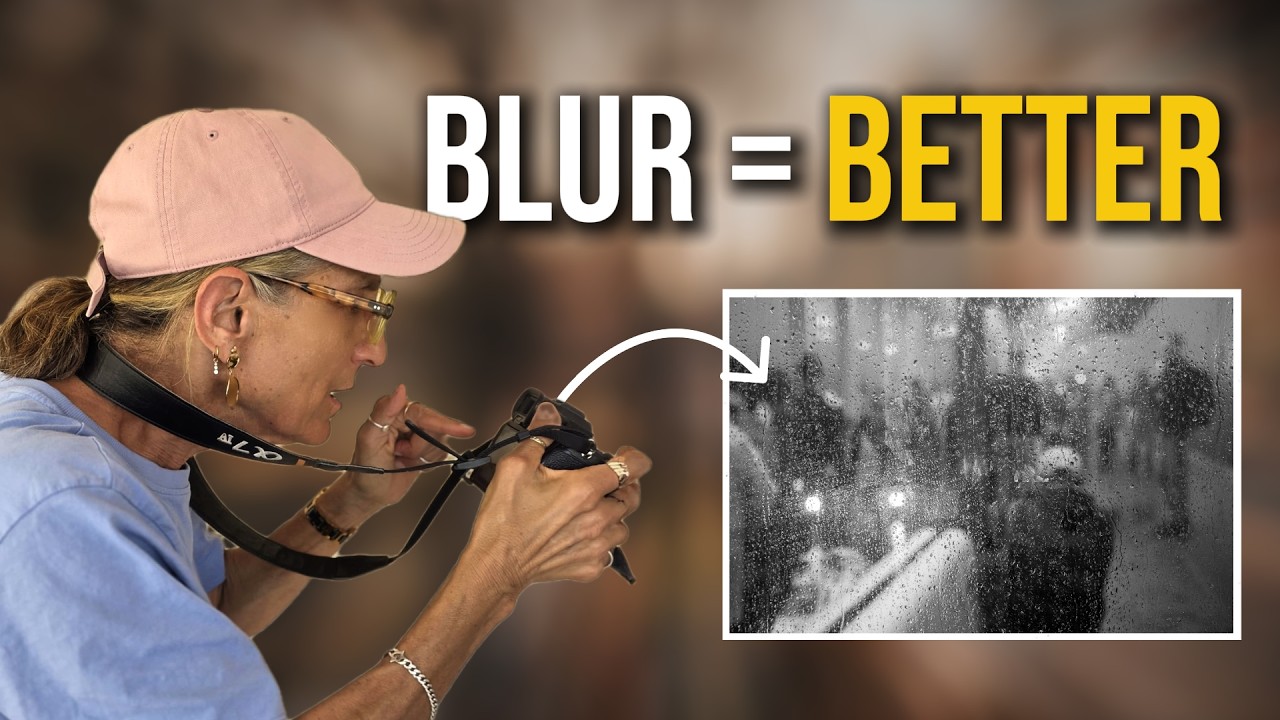
Photography storytelling is the difference between an image people scroll past and one they remember for years. In this video, I want to challenge the biggest myth in photography education: that sharpness is what makes a great photograph. After 25 years of documentary, street, and portrait photography, I have come to believe that the obsession with sharpness is one of the most effective ways to kill the meaning in your images.
Visual storytelling through photography has nothing to do with corner-to-corner sharpness or pixel-perfect detail. The most emotionally powerful photographs ever made — images that changed history, images that stopped wars, images that made the world feel something — are blurry, grainy, and technically imperfect. And they work precisely because of that.
Photography gear and products I use:
Affiliate Links:
Wfolio (get 50% off with my link)
Sony A7IV camera
Sony A7R3 camera
Sigma Art 35 mm 1.4 E-mount lens (Sony)
PGYTECH BAGS Discount Code: REBECCA
OneGo 2 Backpack
OneGo Lite Backpack
OneGo Rope Strap Bag
Luminar Neo Editing Software:
Luminar
I share images from my own archive where sharpness was never the goal, and I walk you through seven of the greatest photographers in history whose most iconic work is blurry, grainy, out of focus, and technically imperfect in almost every way. And yet those images changed how we see the world.
The seven photographers covered in this video: Robert Capa and the D-Day photographs known as The Magnificent Eleven. Henri Cartier-Bresson and the decisive moment. Daido Moriyama and the Japanese aesthetic of rough, blurred, and out of focus. William Klein and the radical street photography of New York. Saul Leiter and the art of shooting through fog, rain, and reflection. Ernst Haas and color as pure emotion. Alexey Titarenko and the long exposures that turned crowds into ghosts.
This is not an argument against sharpness. It is an argument for intention. Every technical decision you make, including whether or not to prioritize sharpness, should serve one question: does this image make someone feel something?
If you are tired of zooming in to 100% and judging your work by the wrong standard, this video is for you.
Topics covered: why sharpness became an obsession and who profits from it, what motion blur and grain actually communicate emotionally, how the greatest documentary and street photographers used imperfection as a language, a new way to evaluate your own images that has nothing to do with test charts, and a simple challenge to try on your next shoot.
Join our free Meaningful Photography community on Skool for weekly image reviews, discussions, and ongoing conversations about photography that goes deeper than gear:
One-on-one mentorship available – contact me at photos@imagesthroughtime.com
Find me on Instagram @rebeccakophoto and Facebook at Rebecca Kowalsky.
I am a Jerusalem-based photographer with over 25 years of experience in events, portraits, street, documentary, and landscape photography. This channel, Meaningful Photography, is built on a single belief: the most important thing in your camera bag is not in your camera bag. It is how you see, what you notice, and why you press the shutter.
These videos are for photographers who are done chasing gear and ready to chase something that actually matters — their own visual voice.
New videos on photography, light, storytelling, and the creative life.
JOIN THE FREE COMMUNITY
A growing group of photographers from around the world who take their craft seriously.
WORK WITH ME
One-on-one mentorship sessions and live masterclasses available.
photos@imagesthroughtime.com
FIND ME HERE
Instagram: @rebeccakophoto
Facebook: Rebecca Kowalsky
Website: imagesthroughtime.com
Comments
25 responses to “The Photography Rule That's Killing Your Best Images”
casualmente me aparece este video, cuando hasta hace una semana llegue a este nivel de madures fotografica 😅
Thank you thank you thank you, this is something I’ve been saying for years and at last a channel devoted to it ❤
I'm thinking about some of the most amazing early images made using Dichromate, silver nitrate even cyanotype, even if you had an in focus image by the time you printed none were super sharp due to the chemical process, this added something even digital would find hard to produce well. eg Stieglizt's work and Gertrude Kasebier's portrait of 'miss Minnie Ashley' No 10 (1905.) Stunning image.
Love you for that 🙏🏻❤️🥳
Ha ha ha…another soul who just stumbled on this channel. Whilst passing a charity shop I bought a book called "Why It Does Not Have To be In Focus." What you present here presents the same message (with some clsrity – no pun intended or maybe it was). Superb, I love it when someone has something to say, and it's meaningful. Bravo
I have so many photos that are blurry that I love. Thank you for this perspective.
Yes, I have deleted pictures because it was not sharp. But I hope that I did not delete a good picture.
I started photography seriously back in 2012 with a used (5 yo) 6 MP Nikon D50 with its cheap 22-80 f/3.8-6 kit lens. I got gorgeous photos, including one that won me a couple of awards.
I now photograph with a Sony 61 MP A7R5 (moved up from an A7R3 after 7 years; this model is a keeper) and use the Sony 24-105mm f/4 G lens. I love the photographs I get from this camera as much as the ones from my D50. BTW, I won an award for a photo made with my A7R3, too.
I share this because each camera had its look and its advantages and I have leaned to see as they do to create photos I love, photos about my subjects, not of my subjects. I shoot for feeling, because I want to share my joy of doing photography and my sense of curiosity and awe in what inspires me to lift the viewfinder to my face and make photos.
Bottom line: For me, sharpness is groovy, but it ain't the point.
Thank you Rebecca for reminding me why I love photography and why it has always been an integral part of my life!
Subbed. Good people on this channel.
I trust your opinion.
Brilliant video. People who have lived, and know the secret should produce more content on da tube.
God knows we need ya. 🥰
these pretzels are making me thirsty
Thanks. I follow several photography YouTube channels, bur your advice is the best I've heard.
I enjoyed this!
Thanks for putting it together
I deliver my work world-wide. If I send them blurry images all will be rejected, so it's all a matter of perspective in what your target audience is and the kind of companies you deliver and sell your work to. Nevertheless, a fine and refreshing video, thank you!
I love abit of blur Rebecca!! Another great lesson .Motion in street_photography injects life
a you a individual what your personality show me a foto
What decisive moment? He would shoot entire rolls of film just to select a single frame.
😂I thought I was ur favorite
rendering > sharpness
emotional resonance > rendering
Eehhhhh says the guy who misses focus all the time. Lol.
Magnifique c'est cela pour moi faire une photo une impression une émotion qui est intime et ne pas chercher a faire une photo comme une carte postale ces comme faire un tableau impressionnistes ou abstrait.je débute dans la photo et j ai tout de suite compris l effet bouger dans les sous bois et en noir et blanc est intense mais parfois aussi la netteté des photos apporte un équilibre merci encore pour cette vidéo.Je suis désolé je ne parle pas anglais .
It's refreshing to see a video going back in time to show me the passion of photography and not the perfect settings or better hardware.
I think it's Ernst Haas. Check out his book. The Creation. Thank you so much for a great, important and informative session.
Have the following dogmas ever helped to make a good, decent, memorable picture? Have they ever made me feel happy, joyful, and free? Every picture gets somewhat uniform, replaceable, and meaningless.